

Nov . 23, 2026
Key data
Abstract
The LK6001 is the hardware choice for facilities that need dry laser image output, while the KX350 is the consumable choice for producing medical images on a compatible imager. Compare their roles, modality coverage, and workflow characteristics before you prepare an order.
This lucky medical dry film comparison covers the Lucky Medical Dry Laser Imager LK6001 and the Lucky Medical Dry Laser Film KX350. They belong to the same dry medical imaging workflow, but they solve different purchasing needs. The LK6001 is an output device; the KX350 is the film used by compatible dry laser imagers.
| Criterion | Lucky Medical Dry Laser Imager LK6001 | Lucky Medical Dry Laser Film KX350 |
|---|---|---|
| Product role | Dry laser imager for medical image output | Dry laser printing film for medical image output |
| Supported imaging formats and modalities | CT, MRI, mammography, and other modalities | FCR, CT, MRI, DR, DSA, and RI |
| Workflow characteristics | 100 sheets per hour with 14" x 17" film, two universal film trays, SAR tone adjustment, and easy maintenance | Quick processing, direct printing without ink or toner drums, easy handling, and moisture resistance |
| Image output characteristics | 508 dpi maximum resolution and 4.0 maximum density | Low fog, high clarity, high density, and bright color tone |
Choose the LK6001 when the purchase is for the imaging hardware that receives digital medical images and prints them. Its two universal trays can hold two film sizes at the same time, and its 100 sheets per hour throughput applies to 14" x 17" film. SAR tone adjustment supports image tone matching for CT and MRI, while the imager also supports mammography.
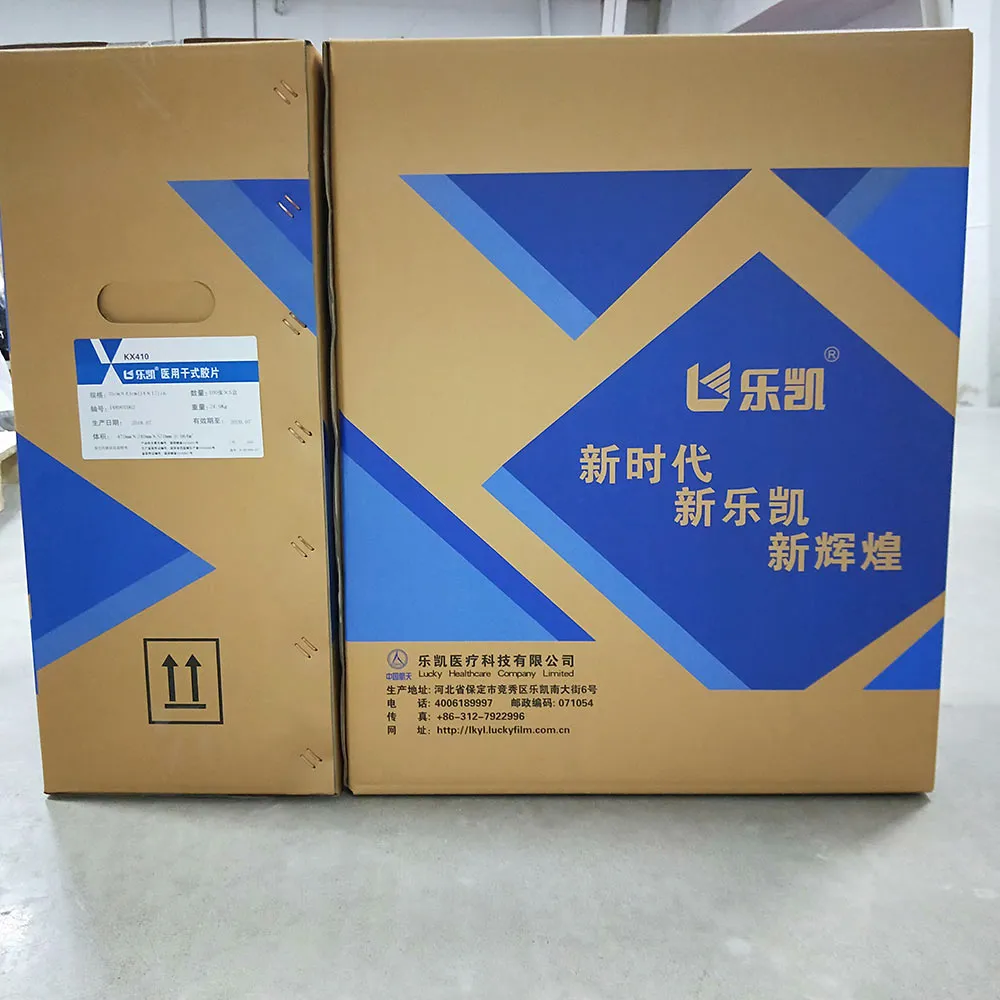
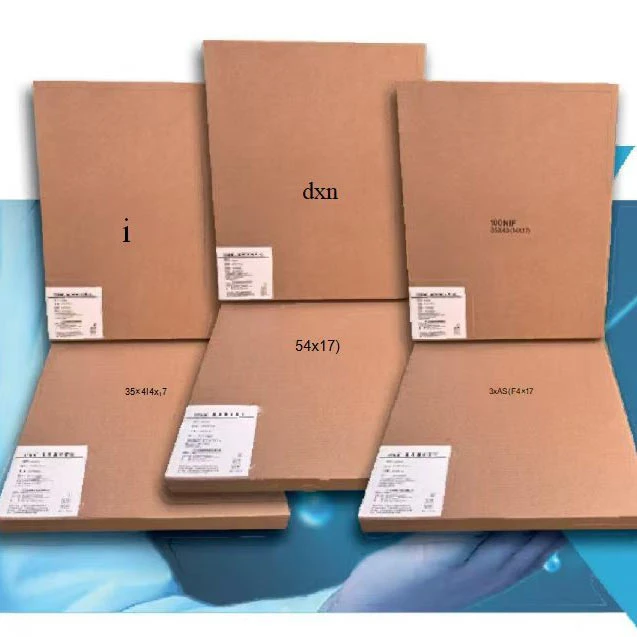
Choose the KX350 when the department needs the film consumed by a compatible dry laser imager. We supply it in 8"x10", 10"x12", 11"x14", and 14"x17" sizes. Its transparent polyester substrate, photosensitive silver halide emulsion, and protective layer support dry laser printing for medical images.
CT and MRI appear in the stated use of both products. The LK6001 adds mammography and uses SAR and LUT functions for tone adjustment. The KX350 covers FCR, DR, DSA, and RI as well as CT and MRI, so the film selection should match the modalities and image sizes in your workflow.
The two products also differ in what you handle day to day. The LK6001 provides the printing platform, resolution, density, tray arrangement, and throughput. The KX350 provides the image-receiving surface and is designed for direct, inkless laser printing. For an order that combines both, check the imager configuration, the required film sizes, and compatibility with the dry laser printing process.
The two options
For an LK6001 order, confirm whether two film sizes need to be available at the same time and whether 14" x 17" output matches the stated throughput condition. For KX350 replenishment, match the requested film size to the department's imaging workflow and use a dry laser imager. Send us the required modality, film size, and equipment model when requesting a quotation.

About the author
The company
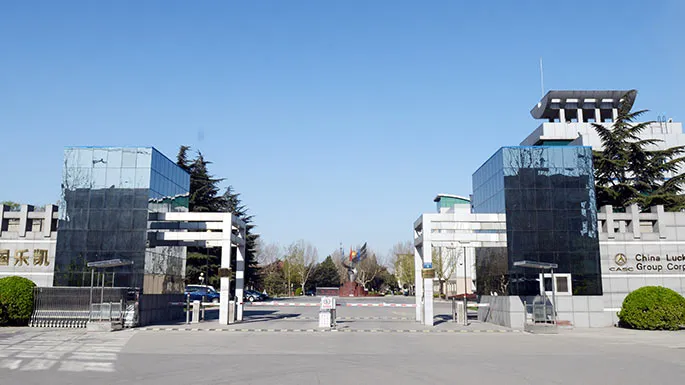
The Evolution of Lucky Group: A Legacy of Innovation and Global Reach On December 24, 1953, the 199th Administrative Meeting of the Government Affairs Council of the Central People's Government passed the *Resolution on Establishing a National Film Distribution Network and Film Industry*, mandating the construction of a film stock manufacturing facility in China. This landmark decision laid the foundation for what would become a cornerstone of China's imaging and materials science sector.…
About Us ↗Visit company website ↗This is the first article
Lucky Medicinal Cold-Forming Composite Material
Lucky KPCW1 Solar Backsheet - Baoding Lekai|UV Protection, Temperature Resistance