

Nov . 18, 2026
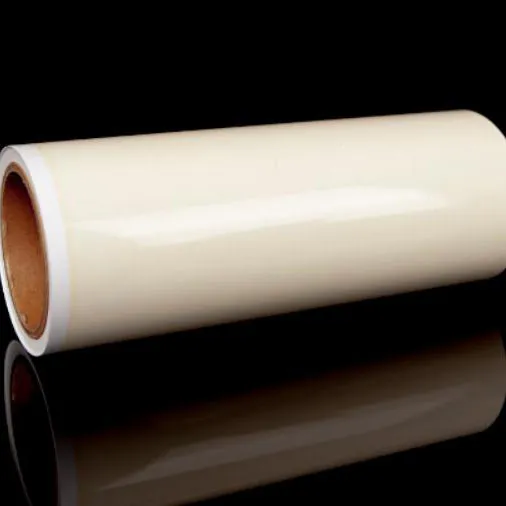
Selecting a solar backsheet manufacturer requires a review of module fit, optical performance, bonding, environmental testing, and the supplier’s production controls. Lucky Tpcw1 suits bifacial module projects using EVA encapsulant and a transparent backsheet, with supplier checks that can be compared before ordering.
A solar backsheet manufacturer should be assessed against the module design and the controls behind the proposed material. For bifacial projects, we supply Lucky Tpcw1 as a transparent backsheet for EVA encapsulation, with defined optical, bonding, environmental, and production-control points for the purchasing review.
Lucky Tpcw1 is designed for bifacial photovoltaic modules used in utility-scale solar plants and BIPV applications. Its total light transmittance is ≥91.5%, so it fits designs that need light to pass through the backsheet toward the rear side of the cells.
The first supplier question is therefore application fit. Send the module structure, encapsulant type, intended use, and sheet dimensions in your inquiry. Choose this product when the design is bifacial, uses EVA encapsulant, and requires a transparent backsheet. A manufacturer’s response should identify the proposed material against those same project details.
A capable supplier response should connect the product construction with measurable values. Lucky Tpcw1 uses a DuPont™ transparent Tedlar® weather-resistant layer with a controlled thickness of 125±5μm. Its fluorinated coating forms a 3D cross-linked bonding layer, and the product has an initial peel strength of ≥70N/cm with EVA interface bonding of >60N/cm.
| Check | Lucky Tpcw1 value |
|---|---|
| Total light transmittance | ≥91.5% |
| Tedlar® film thickness | 125±5μm |
| Initial peel strength | ≥70N/cm |
| Interface bonding with EVA | >60N/cm |
| UV aging resistance | >120kWh/m² |
| Light transmittance retention | >95% after 3000h UV aging |
| Damp heat test | 3000h (85°C/85%RH) |
| Thermal cycling | 200 cycles (-40°C to 85°C) |
| Salt spray resistance | 1000 hours (no corrosion) |
Use these values as a comparison sheet when reviewing solar backsheet suppliers. A useful response should keep the parameter names, units, and proposed product configuration aligned, so your engineering team can assess fit without comparing different measurement descriptions.
Supplier selection also depends on how the manufacturer manages the product between raw material intake and finished-roll inspection. For Lucky Tpcw1, our production controls include incoming inspection of polymers and resins, monitoring of thickness and coating parameters during the 3D cross-linking process, and finished-product inspection for light transmittance and haze.
Ask each solar backsheet manufacturer to explain the checks applied to the proposed material. For this product, the relevant points are:
These questions test technical response and production control directly. They are more useful than comparing a supplier name alone because they connect the backsheet specification to the way the material is made and released.
Outdoor bifacial modules may face UV exposure, humidity, temperature changes, or coastal air. Lucky Tpcw1 includes UV stabilizers in its weather-resistant layer and has values for UV aging, damp heat, thermal cycling, and salt spray.
Compare your module qualification plan with the following product conditions: >120kWh/m² UV aging resistance, >95% after 3000h UV aging light transmittance retention, 3000h (85°C/85%RH) damp heat, 200 cycles (-40°C to 85°C) thermal cycling, and 1000 hours (no corrosion) salt spray resistance. The supplier should identify which product configuration and test records apply to your order.
A solar backsheet manufacturer should be able to respond to a structured request with product, interface, and quality details. Send the module layer sequence and EVA type, then request confirmation of the transmittance, Tedlar® thickness, peel strength, EVA bonding, and environmental conditions listed above.
Also ask how the supplier controls incoming materials, coating thickness, optical inspection, and batch records. Our Tpcw1 product uses ISO 13468 for light transmittance testing and identifies IEC 62788-7-2 for the product standard. Include the standards named for the proposed configuration in your technical comparison.
What to weigh
Your shortlist
Lucky Tpcw1 is the applicable choice for a bifacial module using EVA encapsulant and requiring a transparent backsheet. Review our Lucky Tpcw1 transparent solar backsheet and send the module structure, encapsulant type, sheet dimensions, environmental exposure, and required technical checks with your inquiry.

About the author
The company
The Evolution of Lucky Group: A Legacy of Innovation and Global Reach On December 24, 1953, the 199th Administrative Meeting of the Government Affairs Council of the Central People's Government passed the *Resolution on Establishing a National Film Distribution Network and Film Industry*, mandating the construction of a film stock manufacturing facility in China. This landmark decision laid the foundation for what would become a cornerstone of China's imaging and materials science sector.…
About Us ↗Visit company website ↗This is the first article
Lucky Medicinal Cold-Forming Composite Material

Print DICOM Process in Hospital Imaging Workflows