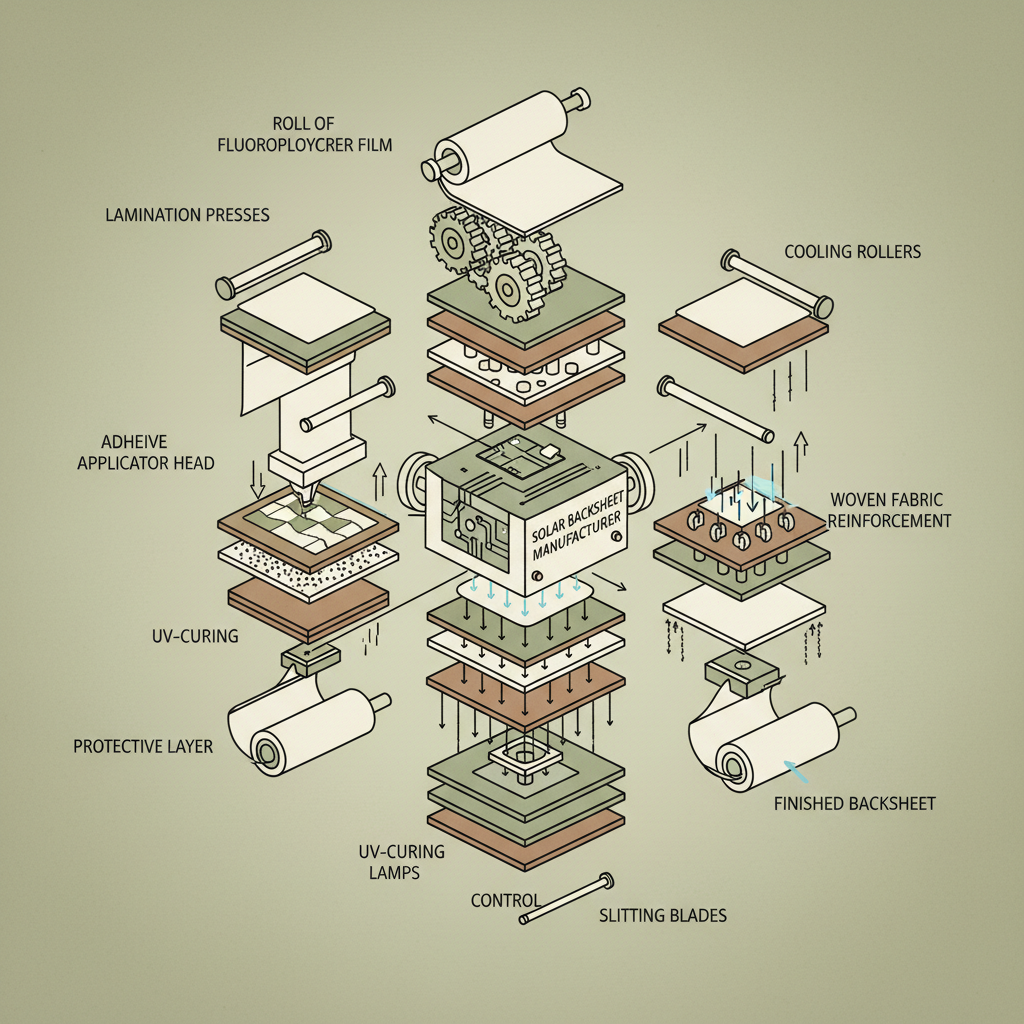
To be honest, the solar backsheet game has been wild lately. Everyone’s chasing higher efficiency, longer lifespans… basically, they want a backsheet that practically lasts forever. It’s funny, because for years it was just ‘good enough,’ you know? Get the job done, keep the moisture out. Now? Now it's a full-blown materials science competition. I've been seeing a lot more emphasis on fluoropolymers – TPT, TPE, even some wild stuff with ETFE – all trying to one-up each other. And the testing standards… don't even get me started.
Have you noticed how everyone's obsessed with PID resistance? Potential Induced Degradation. It’s a mouthful. Basically, high voltage stresses the backsheet and it breaks down. It used to be a problem you’d see after ten, fifteen years. Now they want it guaranteed for thirty. Thirty! It's ambitious, let me tell you. It’s pushing everyone to rethink their materials and processes.
And it’s not just the big guys, either. Smaller manufacturers are popping up, particularly in China, and they're all trying to undercut the established players. The quality varies wildly, though. I saw one batch last quarter… Honestly, it felt like plastic wrap. You could practically smell the VOCs. We sent it straight back.
The Current Landscape of solar backsheet manufacturer
Strangely enough, the biggest driver right now isn’t efficiency – it’s durability in harsh climates. We’re talking extreme heat, humidity, salt spray… You wouldn’t believe the conditions these panels are being installed in. Australia, the Middle East, even inland California. They're being punished out there. That's why you're seeing the rise of more robust materials, like the multi-layer fluoropolymer films. These aren't cheap, mind you.
And it’s not just the material itself. It's the adhesive layers. The adhesion between the backsheet and the encapsulant (usually EVA or POE) is critical. If that fails, you’re looking at delamination and moisture ingress, and then it's game over. solar backsheet manufacturer are seriously investing in adhesive R&D.
Design Pitfalls and Material Choices in solar backsheet manufacturer
I encountered this at a factory in Vietnam last time – they were trying to save a few bucks by using a thinner backsheet. Looked okay at first glance, but when you started stressing it, it just… failed. It buckled, cracked. A classic case of penny-wise, pound-foolish. The biggest pitfall is focusing solely on initial cost and ignoring long-term performance. You've got to think about the entire lifecycle.
The materials themselves… well, you've got your standard TPT (Tedlar-Polyester-Tedlar), which is still a workhorse. Then you have TPE (Tedlar-Polyester-EVA), and increasingly, all-polymer options like ETFE. The ETFE feels different – more like a film than a sheet. It’s got a slightly oily texture. And the smell… kind of chemical-y, but not overly unpleasant. It’s expensive, though. Really expensive.
Anyway, I think a lot of engineers underestimate the importance of UV stabilization. The backsheet is constantly exposed to sunlight, and UV radiation breaks down the polymer chains over time. Proper UV stabilizers are absolutely critical. Without them, you’re basically setting yourself up for failure.
Real-World Testing and Performance of solar backsheet manufacturer
You know, lab tests are fine, but they don't always translate to real-world performance. I've seen backsheets pass all the IEC tests and still fail miserably in the field. That’s why we’ve started doing more accelerated aging tests – exposing samples to extreme temperatures, humidity, and UV radiation for extended periods. It's messy, and it takes time, but it’s worth it.
And it’s not just about the backsheet itself. It’s about how it interacts with the other components of the module. The encapsulant, the glass, the cells… They all have to work together. We’ve been doing a lot of testing with different combinations of materials to find the optimal synergy.
We also look at things like abrasion resistance. A backsheet can get scratched and damaged during installation or cleaning. A small scratch might not seem like much, but it can create a pathway for moisture to enter and cause corrosion.
How Solar Backsheets are Actually Used - Beyond the Spec Sheet
Here's something most people don't realize: installers hate backsheets that are flimsy or difficult to work with. They're up on a roof, dealing with wind, heat, and tight spaces. They don’t have time to fiddle with a backsheet that keeps tearing or wrinkling. A good backsheet should be easy to handle, easy to cut, and easy to apply. Simple as that.
And it's not just about installation. Think about cleaning. Some backsheets get stained easily, and that can reduce the amount of light that reaches the cells. Others attract dust and dirt. These are small things, but they add up over time.
Solar Backsheet Performance Metrics
Advantages, Disadvantages, and Customization Options in solar backsheet manufacturer
The biggest advantage of a good backsheet, obviously, is protection. Protecting the cells from moisture, UV radiation, and mechanical damage. But beyond that, a well-designed backsheet can also improve the module's overall performance by enhancing reflectivity. We’ve seen some interesting developments in that area.
Disadvantages? Cost, mostly. The higher-performance materials are expensive, and that adds to the overall cost of the module. Also, some of the newer materials can be more difficult to process, which can increase manufacturing costs.
A Customer Story: The Backsheet Debacle
Last month, that small boss in Shenzhen who makes smart home devices insisted on changing the interface to for some reason. He thought it would make his panels "more modern." I tried to explain to him that a connector on a backsheet would compromise the seal and introduce a potential point of failure, but he wouldn’t listen. He said he’d "take responsibility." Well, surprise, surprise… the first batch started delaminating after just a few weeks. He was furious, of course.
He ended up having to scrap the entire batch and redesign the backsheet. A very expensive lesson. It just goes to show you – sometimes, sticking with what works is the best approach. Don't try to reinvent the wheel unless you have a very good reason.
Comparative Analysis of Common Solar Backsheet Materials
To give you a better picture, here’s a rough breakdown of some common backsheet materials, based on what I’ve seen on sites. It’s not a scientific study, mind you, just my observations after years of getting my hands dirty.
The table focuses on key areas installers and project developers care about: cost, durability, weight, and ease of handling.
Keep in mind that these are generalizations. Actual performance will vary depending on the specific manufacturer and the quality control processes.
Comparative Analysis of Common Solar Backsheet Materials
| Material Type |
Relative Cost (1-5, 5=Highest) |
Field Durability (1-5, 5=Highest) |
Ease of Handling (1-5, 5=Easiest) |
| TPT (Tedlar-Polyester-Tedlar) |
2 |
4 |
4 |
| TPE (Tedlar-Polyester-EVA) |
3 |
3 |
3 |
| All-Polymer (ETFE) |
5 |
5 |
2 |
| Enhanced TPT (with UV stabilizers) |
3 |
4.5 |
4 |
| Co-Extruded Backsheet |
4 |
3.5 |
3 |
| PET Backsheet |
1 |
2 |
5 |
FAQS
Honestly, it comes down to the EVA layer in TPE. It offers better flexibility, which can be helpful for curved surfaces or high-stress applications. However, EVA is more susceptible to moisture ingress over time compared to Tedlar, so it’s a trade-off. We’re seeing more folks leaning towards TPT for long-term reliability, even though it's slightly less forgiving to work with.
It’s critical, especially in systems with high voltage and high humidity. PID can significantly reduce module power output over time, shortening the lifespan of the entire system. Manufacturers are using various techniques – incorporating PID-resistant materials, optimizing system grounding – to mitigate this issue. It’s something you absolutely have to consider when specifying a backsheet.
Absolutely. We had a customer who wanted a backsheet with a specific color to blend in with a building’s facade. It was a pain to source the right pigments and ensure the colorfastness, but we managed to do it. It’s more common to customize the adhesive layers or add extra UV protection for particularly harsh environments.
Delamination is usually caused by moisture ingress, thermal stress, or a poor bond between the backsheet and the encapsulant. Think of it like a sticker that loses its adhesive. The layers start to separate. It can be exacerbated by poor manufacturing processes or substandard materials. Proper sealing and quality control are crucial to prevent delamination.
That's a tough one. They offer excellent durability and performance, but they're significantly more expensive than traditional TPT backsheets. It depends on the application and the customer’s priorities. If you’re building a system in a particularly harsh environment, the extra cost might be justified. But for a standard residential installation, it might be overkill.
It's tricky. Look for certifications like IEC 61730 and IEC 62716. But those only guarantee that the backsheet meets certain minimum standards. The best way is to check the manufacturer’s reputation, ask for test data, and, honestly, just feel the material. A high-quality backsheet should feel robust and durable, not flimsy or brittle.
Conclusion
Ultimately, all the fancy materials and testing protocols mean nothing if the backsheet doesn't perform in the field. It's about protecting those cells, keeping the moisture out, and ensuring the panel can withstand the elements for decades. We've seen a lot of innovations, and the quality has generally improved across the board, but there are still plenty of pitfalls to avoid.
But you know what? Whether this thing works or not, the worker will know the moment he tightens the screw. If it feels right, if it lays flat, if it doesn't tear easily… that's a good sign. Don't overthink it. Trust your gut, and always prioritize quality over cost. Because in the end, a failed backsheet means a failed project.