What Is X Ray Film? A Simple Definition With Global Impact
When someone mentions x ray film, many immediately think of old-fashioned medical imaging. But let’s pause for a second — what exactly does the term “x ray film definition” encompass? More than just a sheet of material that captures invisible rays, x ray film is a crucial interface between technology and interpretation, forming the backbone of diagnostics, industry inspections, and even art preservation worldwide.
Understanding this term is not just academic; it’s critical for industries ranging from healthcare to manufacturing. Globally, millions of x ray films are produced and used annually, serving as a vital medium where unseen structures come to light. It’s like seeing the invisible and making informed decisions — be it saving lives or ensuring the safety of infrastructure.
In this piece, we'll unwrap what x ray film means, how it’s made, applied, and why it still matters even as digital tech surges ahead. Plus, you’ll find some insights into how it fits into future trends and practical use cases across continents.
Why X Ray Film Matters Globally: A Context
According to the WHO, over 3.6 billion diagnostic imaging procedures are performed globally each year — a staggeringly large figure! And while digital radiography makes up a fast-growing share, conventional x ray film remains indispensable in many regions, particularly in remote areas lacking costly digital infrastructure. The ISO 4096 standard helps unify x ray film production worldwide, ensuring reliability across borders.
But there's a challenge: the environmental impact of chemical processing and disposal, which pushes industries to innovate greener alternatives. Also, training staff to properly use and interpret film-based x rays is a struggle in less-developed healthcare systems, making accessibility a top priority. Therefore, a solid grasp of “x ray film definition” helps decision-makers balance between tried-and-true methods and advancing digital technologies.
Mini takeaway: X ray film remains a globally relevant medium despite digital alternatives, playing a key role in diagnostics and inspections, especially where infrastructure is limited.
X Ray Film Definition Made Simple
In essence, x ray film is a photographic film coated with light-sensitive emulsion, designed to record images produced by x rays passing through objects. When exposed to x rays, chemical changes occur on this emulsion; developing processes then reveal the latent image showing internal details invisible to the naked eye.
This film can be flexible or rigid, and its quality directly affects image clarity — so manufacturers carefully control its layers and materials. You could say the film is a kind of “translator” converting invisible energy into visual form.
Its use isn’t just medical: industries like aerospace, oil and gas, and construction use specialized x ray films for non-destructive testing (NDT), checking welds or internal defects.
x ray film definition often refers not only to the physical film but to the whole imaging process that involves capturing, processing, and interpreting these images.
Core Components That Define Quality & Utility
1. Sensitivity and Speed
This determines how quickly the film reacts to x rays, influencing exposure time and image sharpness. High-sensitivity films require lower radiation doses—a big plus for patient safety.
2. Resolution
The level of detail the film can capture. It’s crucial for distinguishing tiny fractures or subtle anomalies. Many engineers say proper resolution reduces the need for retakes, saving time and cost.
3. Durability
After development, films must resist damage from light, heat, and moisture to preserve images long-term. Durability also makes storage and archiving easier, especially in clinical or industrial repositories.
4. Chemical Composition
The emulsion blend and base materials impact image quality and environmental footprint. Innovations aim to minimize toxic substances while optimizing clarity.
5. Size and Format
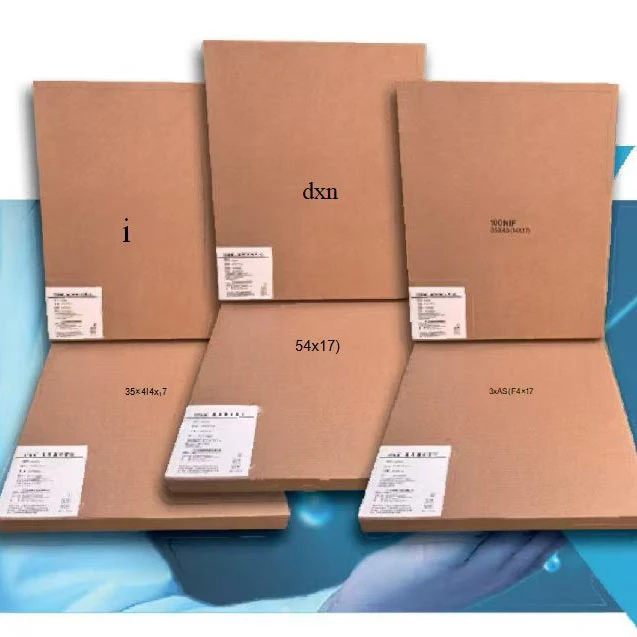
Varies by application — from small dental films to large industrial sheets. The right size streamlines workflow and fits specialized machines.
Mini takeaway: These features collectively shape how x ray film performs in real-world settings, balancing image quality, safety, and environmental considerations.
Worldwide Applications & Who Benefits Most
- Medical diagnostics: Hospitals and clinics in developing nations often rely on x ray films due to lower cost and ease of storage compared to sophisticated digital equipment.
- Industrial inspection: Aerospace companies use x ray films to check aircraft components for faults. Oil pipelines in harsh climates are regularly scanned to prevent leaks or wear.
- Disaster relief: In post-disaster zones where power supplies are unstable, NGOs turn to portable film processing kits to quickly scan injuries or infrastructure damage.
- Art and cultural heritage: Museums utilize x ray film to study paintings' layers and sculptures, preserving history without invasive procedures.
Oddly enough, even in an era of smartphones and digital everything, the humble x ray film maintains a foothold in such crucial sectors that rely on reliable, cost-effective imaging.
Advantages & Long-Term Value of X Ray Film
The benefits can be grouped into tangible and intangible:
- Cost-effectiveness: Especially where digital systems are costly to install and maintain.
- Proven reliability: Film is less susceptible to hacking or digital malfunctions — trust built over decades.
- Archival stability: Films stored properly can last decades, useful for medical records or legal evidence.
- Social impact: Improves healthcare access in remote, underserved communities.
- Emotional peace of mind: For patients and workers who want tried-and-true methods in unpredictable environments.
Many radiologists mention the “visual confidence” when examining clear films, which sometimes digital displays can’t fully replicate.
Exciting Future Trends and Innovations
We’re seeing several fronts pushing x ray film forward:
- Eco-friendly materials: Biodegradable bases and reduced silver content films reduce environmental burdens.
- Hybrid analog-digital systems: Combining film capture with digital scanning allows archival flexibility and enhanced sharing.
- Automation in processing: Fully automated development units speed up workflow and lower human error.
- Regulatory updates: International standards from bodies like ISO and ASTM keep improving quality and safety benchmarks worldwide.
It feels like x ray film is evolving gracefully—adapting to a greener and more interconnected world.
Common Challenges and How Experts Solve Them
- Environmental waste: Chemical processing produces toxic runoffs. The solution? Closed-loop recycling and non-toxic developing agents.
- Skill gaps: Proper handling and interpretation can be tricky. Training programs liaising with ISO guidelines help maintain high standards.
- Equipment obsolescence: Aging film processors require costly updates—many opt for modular upgrades or hybrid machines.
- Access in remote areas: Mobile processing units and solar-powered labs address infrastructure shortages.
In fact, innovation comes not just from manufacturers but from field experts adapting to local constraints.
Practical FAQs on X Ray Film Definition
- What exactly distinguishes x ray film from regular photographic film?
- X ray film has a specialized emulsion sensitive to x ray radiation, whereas photographic film responds to visible light. This difference allows it to capture internal structures invisible to the naked eye.
- How long can x ray films be safely stored?
- When stored in cool, dry, and light-protected conditions, x ray films can last 10 to 20 years or more without significant degradation, making them invaluable for archival purposes.
- Are digital x rays replacing x ray films completely?
- Not entirely. While digital radiography offers speed and easy sharing, x ray films remain popular in cost-sensitive and infrastructure-limited environments due to lower upfront costs and equipment simplicity.
- How do industries ensure the quality of x ray films?
- Through strict adherence to standards like ISO 4096, controlled manufacturing environments, and rigorous testing for sensitivity, resolution, and chemical purity before release.
- Can x ray films be recycled or disposed of safely?
- Yes, specialized recycling programs recover silver from used films, and chemical waste must be treated before disposal to minimize environmental harm.
Conclusion: Seeing the Big Picture with X Ray Film
In the end, understanding x ray film definition means appreciating both its scientific detail and its human impact. This medium bridges technology and trust, where clarity equals life, safety, or integrity. While the world leans toward digital, x ray film remains a resilient, sustainable, and often indispensable tool across continents and industries.
If you want to explore high-quality x ray films and related products or see how this traditional technology meets tomorrow’s challenges, visit our website at LK International. We promise it’s more relevant than you might expect.
Product Specification Table: Common X Ray Film Types
| Specification |
Standard Medical Film |
Industrial NDT Film |
High-Resolution Film |
| Sensitivity (Speed) |
Medium (M) |
High (H) |
Extra High (EH) |
| Resolution |
7 line pairs/mm |
5 line pairs/mm |
10 line pairs/mm |
| Base Material |
Polyester |
Polyester |
Glassine Paper |
| Typical Size |
14"x17" |
10"x24" |
8"x10" |
| Shelf Life (Unexposed) |
12 months |
18 months |
6 months |
Vendor Comparison: Leading X Ray Film Manufacturers
| Feature |
Company A |
Company B |
Company C |
| Product Range |
Medical & Industrial |
Medical Only |
Industrial & Specialty |
| Global Reach |
120+ Countries |
80 Countries |
60 Countries |
| Sustainability Initiatives |
Silver Recovery & Eco Packaging |
Chemical Waste Reduction |
Biodegradable Films Pilot |
| Price Range |
$$ - Moderate |
$ - Budget |
$$$ - Premium |
| Special Certifications |
ISO 10993, FDA Approved |
CE Marked |
ASTM Verified |
Final thoughts
So, x ray films are more than just photographic sheets collecting dust in darkrooms. They’re trusted tools across the world, quietly bridging the gap between complexity and clarity. While digital radiography may usher in the future, the physical x ray film maintains a unique combination of simplicity, reliability, and affordability that’s tough to beat—especially in challenging environments.
Thanks for sticking with me here. Hopefully, this breakdown helps you navigate the world of x ray films with a clearer outlook, not just technical jargon but a real sense for the stakes and stakesmen.
References and Further Reading
- Radiography - Wikipedia
- ISO 4096: X-Ray Films for Medical Radiography
- World Health Organization - Diagnostic Imaging