

Feb . 26, 2026
When printing documents or photos, many people wonder about plain paper vs inkjet paper and whether the difference really matters. While both types of paper can be used in inkjet printers, they are designed for different purposes and deliver different results. Choosing the right paper not only improves print quality but also helps protect your printer and reduce long-term costs.
This guide explains the differences between plain paper and inkjet paper, their advantages, and how to choose the best option for your printing needs.
Plain paper is the most common type of printing paper used in homes and offices. It is typically made from standard wood pulp and has a relatively smooth but uncoated surface. Most copy paper used in everyday printing falls into this category, usually with weights ranging from 70–90 gsm.
Plain paper is ideal for:
Text documents
Draft prints
Office reports
School assignments
Everyday printing tasks
Because plain paper is uncoated, ink tends to soak into the fibers quickly. This helps the ink dry faster and reduces smudging during normal printing. However, the downside is that ink absorption can reduce sharpness and color vibrancy.
Plain paper is also widely available and inexpensive, making it suitable for high-volume printing environments such as offices and schools.
Inkjet paper is specially engineered for inkjet printers. Unlike plain paper, it usually has a coated or treated surface designed to control ink absorption and improve print clarity.
High-quality inkjet paper often includes:
Ink-absorbing layers
Smooth coated surfaces
Improved brightness
Enhanced color reproduction
Inkjet paper is ideal for:
Photos
Marketing materials
Presentations
Graphics
High-quality images
Because inkjet paper controls how ink spreads across the surface, prints appear sharper and more detailed compared to plain paper. Colors are also more vivid and accurate, which is important for professional documents and photographs.
Inkjet paper may come in several finishes such as:
Matte
Glossy
Semi-gloss
Satin
These finishes allow users to choose the best look depending on the application.
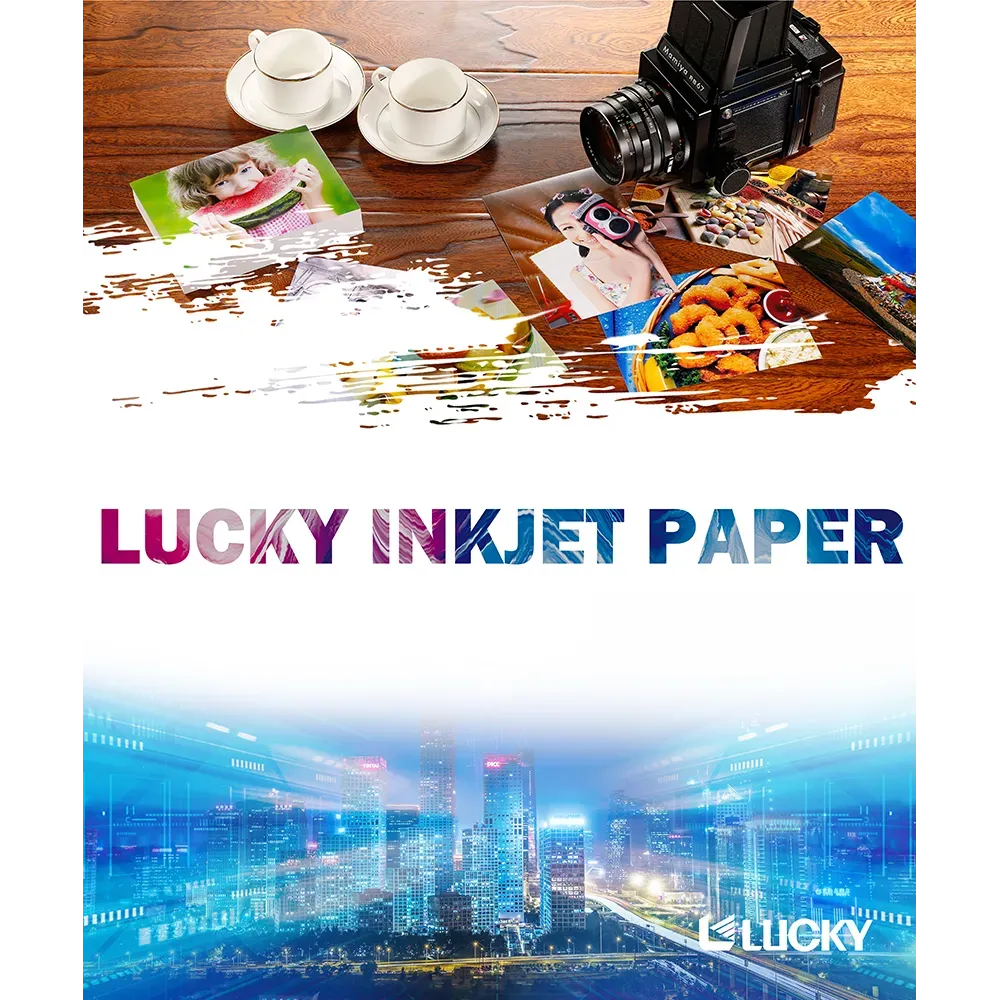
Understanding the differences between plain paper vs inkjet paper helps you select the best option for your printing needs.
The biggest difference between the two is the surface treatment.
Plain paper:
Uncoated surface
Absorbs ink quickly
Less control over ink spread
Inkjet paper:
Special coating or treatment
Controlled ink absorption
Better print definition
The coating on inkjet paper prevents ink from bleeding into the fibers, producing sharper lines and images.
Print quality is where inkjet paper clearly stands out.
Plain paper usually produces:
Softer text edges
Slight ink bleeding
Duller colors
Inkjet paper produces:
Sharp text
Clear images
Rich colors
If you compare prints side by side, the difference between plain paper and inkjet paper becomes especially noticeable in graphics and photos.
Another important difference in plain paper vs inkjet paper is ink efficiency.
Plain paper absorbs more ink into the fibers, which can increase ink consumption over time. This can make printing more expensive if you print frequently.
Inkjet paper uses controlled absorption, meaning:
Ink stays closer to the surface
Less spreading occurs
Ink usage may be more efficient
Better ink control can help maintain consistent print quality while reducing waste.
Cost is often the main reason people choose plain paper.
Plain paper:
Lower cost per sheet
Widely available
Suitable for bulk printing
Inkjet paper:
Higher cost per sheet
Specialized manufacturing
Designed for premium printing
For everyday office printing, plain paper is usually the most economical choice. Inkjet paper is better suited for situations where print appearance matters more than cost.
Plain paper works best for routine printing tasks where high image quality is not required.
Recommended uses include:
Internal documents
Draft printing
Emails and reports
Worksheets
Text-heavy documents
If you print hundreds of pages per month, plain paper offers a practical and affordable solution.
Plain paper is also the safest choice when you need fast-drying prints for quick handling.
Inkjet paper should be used whenever print quality is important.
Ideal applications include:
Photo printing
Business presentations
Brochures
Product sheets
Marketing materials
Inkjet paper enhances image clarity and color depth, making documents look more professional.
For businesses that rely on printed materials to represent their brand, inkjet paper provides a noticeable improvement in appearance.
Yes, plain paper works perfectly in inkjet printers and is commonly used for everyday printing. Most inkjet printers are designed to handle standard copy paper without any issues.
However, while plain paper is compatible, it does not provide the same print quality as inkjet paper. Photos and graphics printed on plain paper may appear less sharp and less vibrant.
Printer settings can help improve results. Selecting the correct paper type in the printer driver allows the printer to adjust ink distribution for better output.
Choosing between plain paper vs inkjet paper depends mainly on your printing goals.
Choose plain paper if you need:
Low-cost printing
Large print volumes
Text documents
Fast printing
Choose inkjet paper if you need:
High-quality images
Sharp text
Professional results
Photo printing
Many users keep both types available so they can select the right paper depending on the task.
Understanding the differences between plain paper vs inkjet paper helps you make smarter printing decisions. Plain paper is affordable and practical for everyday printing, while inkjet paper delivers superior image quality and professional results.
For routine documents, plain paper is usually sufficient and cost-effective. For photos, presentations, and marketing materials, inkjet paper is the better choice. By using the right paper for the right job, you can improve print quality while managing printing costs efficiently.
Lucky Medicinal Cold-Forming Composite Material
Accurate Vet Hematology Analyzer | Fast & Reliable Results11860