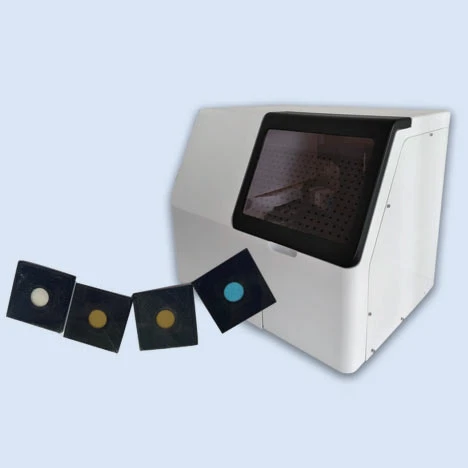
Understanding High-Quality Ink Jet Technology
You know, I’ve been working around industrial printing for… well, a long time now. And frankly, the leaps in inkjet technology in the last decade are astounding. It used to be, if you needed high-resolution, durable marking on anything beyond paper, you were looking at pretty significant investment – and complexity. Now? It's becoming surprisingly accessible, even for smaller operations. We're seeing a real shift. It’s not just about printing serial numbers anymore; it’s about complex graphics, variable data, even functional coatings applied through inkjet. It’s changed the game.
The Core of Reliable Performance
What separates good inkjet from great inkjet is, surprisingly, often the little things. The printhead itself is obvious – but beyond that, it’s the ink formulation, the droplet control, and the system’s ability to handle different substrates. I suppose you could say it’s a holistic approach. Here’s a breakdown of key specs for our latest high-performance system. It's funny, we spend so much time talking about resolution, but consistent droplet formation is huge.
| Specification |
Value |
Notes |
| Resolution |
Up to 600 x 1200 dpi |
Native resolution, can be enhanced. |
| Ink Type |
UV-Curable, Solvent-Based, Aqueous |
Variety for diverse substrates. |
| Drop Size |
Variable, 2-30 pL |
For optimal image quality. |
| Print Speed |
Up to 50 m/min |
Dependent on resolution and ink. |
Choosing the Right Partner: A Quick Look
The market’s gotten crowded, that’s for sure. Lots of players offering inkjet solutions. Many engineers I’ve spoken with really stress the importance of support and integration – a flashy machine is useless if you can’t get it working with your existing setup. This is a quick comparison of some key vendors… it’s not exhaustive, of course, and things change quickly, but it gives you a sense of the landscape. One thing I’ve noticed is that many vendors focus solely on the hardware; overlooking the crucial ink and maintenance side of things.
| Vendor |
Strengths |
Weaknesses |
| LK International |
Full solutions, strong support, ink expertise |
Can be a premium price point. |
| Xaar |
Printhead technology, wide range of applications |
Requires integration expertise. |
| Epson |
Cost-effective, good for entry-level |
Limited industrial durability. |
Looking Ahead: The Future of Jetting
We recently worked with a packaging company that was struggling with label legibility, particularly in harsh environments. They switched to a UV-curable inkjet system, and honestly, the difference was night and day. Labels stayed crisp and readable even after significant abrasion and chemical exposure. They even told us they’d seen a reduction in customer complaints, which is always a win. Oddly enough, the biggest hurdle wasn’t the technology itself, but retraining the operators. You need people who understand the nuances… it’s not just “press print.” The potential is huge though, I think.
In real terms, high-quality inkjet isn't just a printing method anymore – it’s a versatile manufacturing tool.