

Sep . 23, 2025
The landscape of veterinary medicine is rapidly evolving, driven by advancements in technology, increased pet ownership, and a growing emphasis on preventative care. Central to this evolution are sophisticated diagnostic tools, with the vet hematology analyzer emerging as an indispensable asset for modern animal healthcare professionals. The global veterinary diagnostics market is projected to reach significant valuation, propelled by the rising incidence of animal diseases and the increasing demand for advanced diagnostic solutions.
This technological push extends beyond hematology to include comprehensive diagnostic panels, where the integration of a veterinary hematology analyzer with a vet chemistry analyzer or veterinary biochemistry analyser offers a complete picture of an animal's health status. Current trends indicate a move towards automation, miniaturization, and enhanced data integration, allowing for faster, more accurate results with smaller sample volumes. This not only improves patient outcomes but also optimizes clinic workflow and resource utilization. Veterinarians are increasingly seeking instruments that offer species-specific parameters, advanced flagging systems, and connectivity to practice management software, highlighting the demand for highly specialized and integrated diagnostic platforms.
The market for veterinary diagnostic equipment, including the veterinary hematology analyzer price segment, is highly competitive. Manufacturers are focusing on innovation to provide cost-effective, high-performance solutions that meet the diverse needs of general practices, specialized animal hospitals, and research facilities alike.
The creation of a high-performance vet hematology analyzer is a meticulous process, demanding stringent quality control and precision engineering at every stage. It combines advanced materials with sophisticated manufacturing techniques to ensure accuracy, reliability, and longevity.
1. Component Sourcing & Quality Inspection
High-grade plastics for fluidics, precision optical components, electronic PCBs, highly reliable pumps and valves. Each component undergoes rigorous incoming quality control.
2. Precision Assembly & Integration
Cleanroom assembly of fluidic systems, optical path alignment, electronic board integration. Utilizes automated assembly lines and skilled technicians to ensure exact component placement and connections.
3. Software Development & Upload
Proprietary software for data analysis, user interface, and instrument control is developed and uploaded, ensuring species-specific algorithms and robust data handling capabilities.
4. Extensive Testing & Calibration
Multi-point calibration using certified reference materials, functional testing of all mechanical and optical systems, thermal cycling, and noise level analysis. Performance verification against known standards.
5. Final Quality Assurance & Packaging
Comprehensive final inspection including aesthetic, functional, and performance checks. Compliance with international standards (e.g., ISO 13485 for medical devices, CE marking) is verified before secure packaging for shipment.
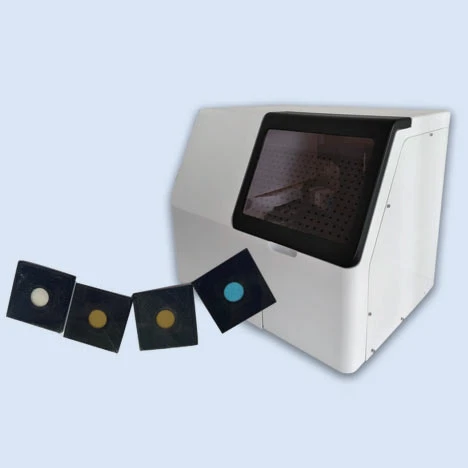
Materials and Processes: Components are often made from medical-grade plastics for inertness and durability, and precision-machined metals for structural integrity. Microfluidic channels are typically created via precision molding or laser etching. The entire manufacturing process adheres to strict quality management systems such as ISO 13485, ensuring consistency and high performance. Service life is optimized through modular design, allowing for easy replacement of wear parts, and robust construction designed for high throughput in demanding veterinary environments.
Target industries for these advanced instruments include veterinary clinics (general practice and specialty), animal hospitals, university veterinary teaching hospitals, and research laboratories focusing on animal health and pharmaceutical development. The advantages inherent in this manufacturing approach translate directly into benefits for the end-user: superior accuracy for critical diagnoses, exceptional reliability to minimize downtime, and extended service life, contributing to a lower total cost of ownership.
Modern vet hematology analyzer systems leverage sophisticated technologies to provide comprehensive blood count analyses. Key methodologies include impedance for cell counting and sizing, spectrophotometry for hemoglobin measurement, and advanced flow cytometry combined with laser scatter for detailed white blood cell (WBC) differential analysis. These technologies allow for precise enumeration and morphological assessment of various blood cell populations.
| Feature | Specification |
|---|---|
| Parameters | 21-29 parameters, 3-part or 5-part differential (e.g., WBC, RBC, HGB, HCT, MCV, MCH, MCHC, PLT, NEU, LYM, MONO, EOS, BASO) |
| Throughput | 60-80 samples per hour |
| Sample Volume | Whole Blood: 9-20 µL (dependent on model and analysis mode) |
| Species Supported | Pre-set for Canine, Feline, Equine, Bovine, Porcine, etc.; User-definable channels for exotic species. |
| Data Storage | Up to 100,000 results with histograms and scattergrams |
| Connectivity | LIS/HIS bidirectional, USB, RS232, Ethernet |
| User Interface | Color LCD touch screen |
| Quality Control | Built-in QC programs (L-J, X-R, X-B) |
| Dimensions (W×D×H) | Approx. 380mm × 450mm × 500mm |
| Weight | Approx. 25 kg |
These specifications underscore the analytical prowess of modern veterinary hematology analyzer systems, providing veterinary professionals with the critical data needed for accurate diagnosis and effective treatment planning. The ability to customize species parameters is particularly vital in a field dealing with diverse animal populations.
The utility of a vet hematology analyzer extends across a broad spectrum of veterinary applications, from routine wellness checks to complex disease management. Its rapid and accurate results are invaluable in various clinical settings.
"Our small animal clinic invested in a new veterinary hematology analyzer last year, and it has transformed our diagnostic capabilities. The speed and accuracy of results mean we can often get answers for worried pet owners during their visit, which significantly improves client satisfaction. The user-friendly interface made training our staff incredibly smooth, and the species-specific reference ranges are spot on." – Dr. Sarah Chen, Harmony Veterinary Clinic.
"As a large animal mobile practice, we need robust and reliable equipment. Our portable vet hematology analyzer has allowed us to perform on-site CBCs for horses and livestock, reducing turnaround times dramatically. This has been particularly helpful in managing outbreaks and assessing treatment responses in the field." – Dr. Mark Johnson, AgriVet Mobile Services.
These testimonials highlight the practical impact and experience gained by integrating advanced hematology analyzers into diverse veterinary practices, demonstrating their indispensable role in modern animal healthcare.
The technical superiority of a well-engineered vet hematology analyzer provides distinct advantages over manual methods and less advanced systems, directly impacting diagnostic quality, operational efficiency, and overall practice profitability.
These advantages collectively position the veterinary hematology analyzer as an essential investment, transforming diagnostic capabilities and fostering superior patient care while optimizing operational workflows.
Choosing the right vet hematology analyzer involves evaluating not just technical specifications but also vendor support, long-term costs, and compatibility with existing practice infrastructure. A thorough comparison helps identify the best fit for specific veterinary needs.
| Feature | Vendor A Analyzer (Example) | Vendor B Analyzer (Example) | Our Offering (Example) |
|---|---|---|---|
| Analysis Type | 3-part Diff (Impedance) | 5-part Diff (Laser Scatter, Flow Cytometry) | 5-part Diff (Laser Scatter, Flow Cytometry) |
| Throughput | 45 samples/hr | 60 samples/hr | 70 samples/hr |
| Sample Volume | 13 µL (whole blood) | 15 µL (whole blood) | 12 µL (whole blood) |
| Species Profiles | 10 pre-set + 3 user-defined | 15 pre-set + 5 user-defined | 20 pre-set + 10 user-defined |
| Reagent Consumption | Moderate | Low | Very Low |
| LIS Connectivity | Unidirectional | Bidirectional | Bidirectional with advanced protocols |
| Support Network | Regional | National | Global and Local |
| Approx. Price Range | $$ (Entry-level) | $$$ (Mid-range) | $$$+ (Premium Features) |
The veterinary hematology analyzer price is often a key decision factor, but it is crucial to consider the total cost of ownership, including reagent costs, service contracts, and potential revenue generation from in-house diagnostics. Selecting a vendor with a strong track record of service and innovation ensures a long-term, reliable partnership.
Recognizing that no two veterinary practices are identical, leading manufacturers offer customized solutions to ensure their vet hematology analyzer seamlessly integrates into diverse operational environments. This goes beyond standard product offerings to provide tailored support and configuration.
Partnering with a manufacturer committed to customization and continuous support ensures that the investment in a vet hematology analyzer yields maximum value, adapting to the evolving needs of the practice and facilitating superior patient care.
The practical application of the vet hematology analyzer is best illustrated through real-world scenarios, demonstrating its critical role in effective veterinary care and research.
Client: Urban Pet Wellness Center, a busy small animal practice.
Challenge: Frequent presentation of senior pets with non-specific symptoms (lethargy, decreased appetite), requiring rapid and accurate diagnostic screening to rule out serious conditions.
Solution: Implementation of a high-throughput 5-part differential vet hematology analyzer.
Outcome: A 9-year-old Labrador presented with mild lethargy. The analyzer quickly identified a moderate normocytic, normochromic anemia and a significant basophilia, prompting further investigation that led to an early diagnosis of a splenic mass. Rapid diagnosis allowed for timely surgical intervention and improved prognosis. The ability to perform a CBC in-house within minutes significantly reduced diagnostic delays and client anxiety.
Client: Green Pastures Equine Hospital, specializing in equine and large animal medicine.
Challenge: Monitoring the immune status and detecting subclinical infections in a large herd of performance horses, particularly during high-stress periods like competition season or breeding.
Solution: Deployment of a robust veterinary hematology analyzer with specific equine profiles, capable of handling a higher volume of samples efficiently.
Outcome: During a routine wellness check, the analyzer flagged several horses with mild leukocytosis and a left shift in neutrophils, indicative of a subclinical bacterial infection. Early identification allowed for targeted antimicrobial treatment, preventing the spread of infection throughout the herd and minimizing impact on performance and breeding schedules. The analyzer's ability to provide rapid results in the field (or quickly in the lab from field samples) proved invaluable for proactive herd management.
These cases underscore how modern veterinary hematology analyzer systems provide actionable insights, enabling veterinarians to deliver high-quality, timely care and contributing significantly to animal health and welfare.
Establishing trust with B2B clients requires transparency in product performance, logistical processes, and comprehensive after-sales support. We adhere to rigorous standards to ensure confidence in our solutions.
Our streamlined logistics ensure efficient order processing and delivery. Upon receiving your purchase order, our team confirms specifications and initiates the fulfillment process. Installation and initial training are coordinated to minimize disruption to your practice, typically scheduled within 1-2 weeks post-delivery.
We stand by the quality of our products. Our standard warranty for the veterinary hematology analyzer provides peace of mind, covering critical components and ensuring the system operates to its published specifications. Details are explicitly outlined in your purchase agreement.
Our commitment extends beyond the sale. We offer a multi-tiered support system, including phone and email technical assistance, remote diagnostics, and a network of certified field service engineers for on-site interventions. Regular maintenance schedules and prompt access to authentic spare parts guarantee consistent, reliable operation of your vet hematology analyzer for years to come.
The modern vet hematology analyzer is more than just a piece of equipment; it is a pivotal diagnostic partner that empowers veterinary professionals to deliver higher standards of care. By offering rapid, accurate, and comprehensive hematological profiles, these advanced instruments facilitate early disease detection, precise treatment monitoring, and efficient clinic workflow. As the veterinary industry continues its trajectory of growth and sophistication, the role of reliable and technologically advanced diagnostic tools like the veterinary hematology analyzer will only expand, reinforcing its status as an indispensable investment for any forward-thinking practice.

Lucky Medicinal Cold-Forming Composite Material

Choosing the Premier Inkjet Photo Paper Manufacturer for Superior Print Quality