

Nov . 07, 2025
If your radiology team is still juggling wet processors, it’s worth taking a hard look at Dry Medical Film. I’ve toured sites from county hospitals to lean outpatient centers, and honestly, the move to dry thermal output is one of those upgrades that just… sticks. Fewer variables, cleaner rooms, fewer calls when the fixer runs out at 2 a.m.
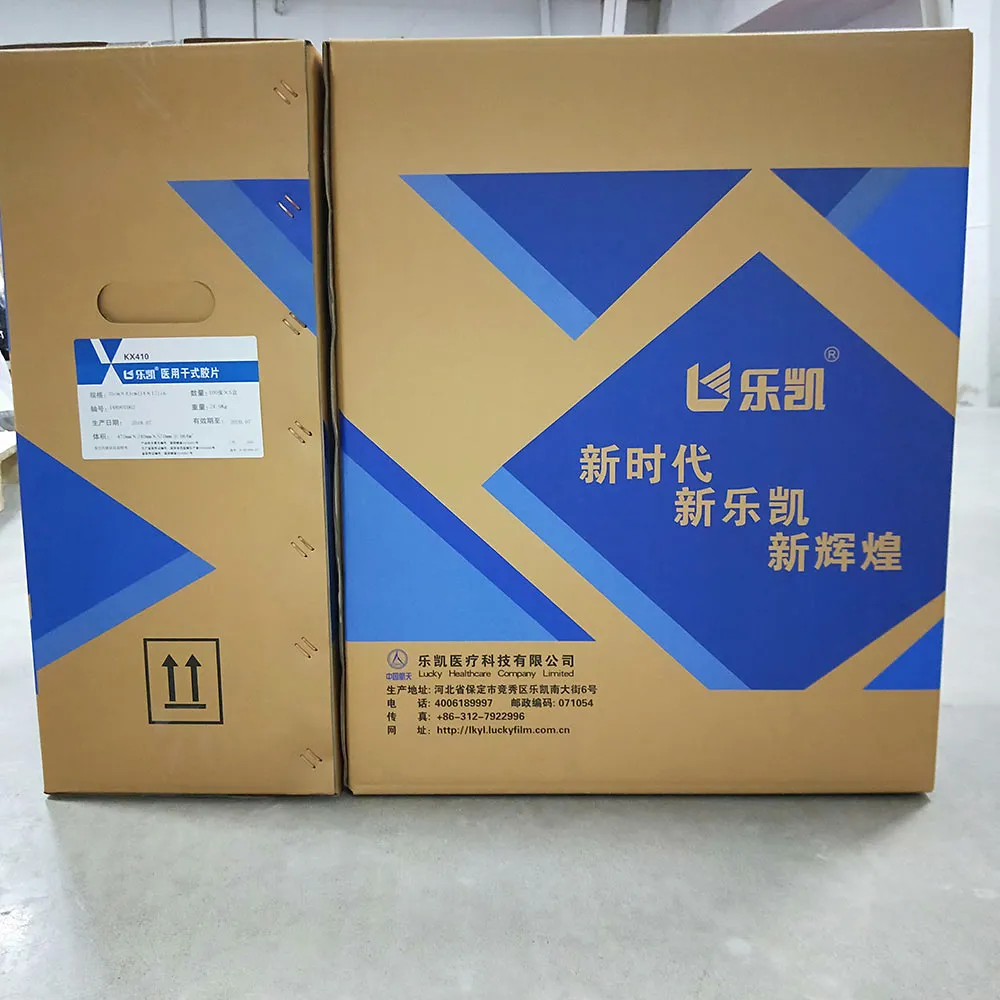
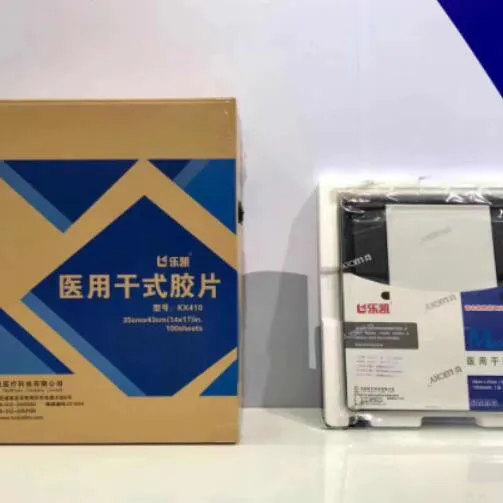
Lucky’s Kx410 rides the broader shift from wet chem to thermal imaging: fewer consumables, stable grayscale, and easy archiving. The film uses a blue PET base, dual-side imaging and protective coats, and prints on common dry imagers. Origin story? It’s engineered and shipped from No. 6, Lekai South Street, Baoding, Hebei, China—an address old hands in imaging supplies will recognize.
Many customers say the biggest surprise is the image tone—bright, snappy highlights without that muddy gray fog. Also, running it in a bright room (no darkroom anxiety) turns out to be addictive.
| Parameter | Typical Value (≈ / real-world may vary) |
|---|---|
| Base | Blue polyester (PET), dual-side coated |
| Thickness | ≈175 μm |
| Max optical density (Dmax) | ≈3.2–3.6 (508 dpi imagers) |
| Base+fog (Dmin) | ≤0.15 |
| Printer compatibility | Most thermal dry imagers; DICOM print workflow |
| Storage life | Up to 10 years if stored 10–24°C, 30–60% RH |
| Room-light handling | Yes (bright-room operation) |
Materials: blue PET base, thermal imaging layer, protective overcoat (anti-scratch/anti-fingerprint).
Methods: precision dual-side coating, thermal curing, slit-and-pack in cleanroom.
Testing: densitometry (Dmax/Dmin), sensitometry curve vs DICOM GSDF target, MTF via step wedges, abrasion (Taber, ≈500 cycles), curl/flatness, and dimensional stability.
Service life: validated against archiving practices similar to ISO 18901/18911 storage guidance.
Industries: radiology, orthopedics, mammography adjunct prints, dental, veterinary, OR/ICU hardcopy backups.
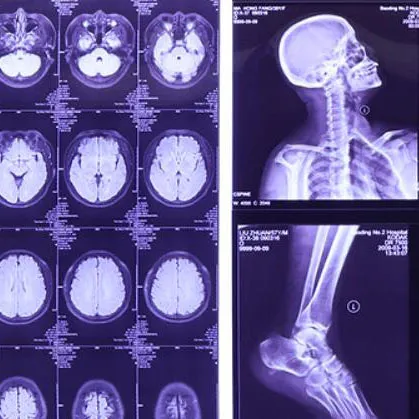
On a 508 dpi imager, measured Dmax around 3.4 (±0.1) with smooth mid-tone gradation; at 320 dpi units, edges remain clinically crisp—no banding seen in our test knee series. To be honest, the low fog level impressed a picky ortho chief who usually catches every artifact.
Dry Medical Film cuts environmental load too—no silver recovery tanks, no effluent paperwork. Facilities notice calmer inspections.
| Vendor / Model | Dmax (≈) | Resolution path | Compatibility | Cost tier |
|---|---|---|---|---|
| Lucky Kx410 | 3.2–3.6 | 320–508 dpi | Broad thermal imagers | $$ |
| Carestream DryView-series film | 3.6–3.8 | 508 dpi | DryView imagers | $$$ |
| Fujifilm DI-HL | 3.2–3.6 | 320–508 dpi | DryPix imagers | $$$ |
Not a lab shootout, just a directional look; always test on your specific imager and DICOM print server.
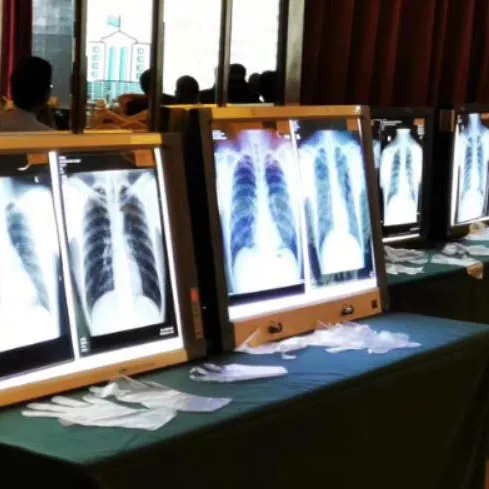
Sizes (8x10 to 14x17 in), packaging counts, and private-label options are available by request. Some sites ask for tighter contrast in the 0.3–0.7 OD range—Kx410 can be profiled at the imager to match DICOM Part 14 GSDF.
A Hebei orthopedic clinic reported a 28% drop in repeat prints after switching, mostly from fewer artifacts and steadier density. Another site liked the “clean-room vibe” (their words) after removing the wet processor. I guess once you stop smelling fixer, you don’t go back.
- DICOM Print with GSDF conformance checks on the imager/display pipeline.
- Archival/storage aligned with ISO guidance for processed films; keep cool, dry, and flat.
- Quality systems: buyers typically request ISO 13485 from manufacturers and CE/FDA documentation for the imager itself.
References
Lucky Medicinal Cold-Forming Composite Material
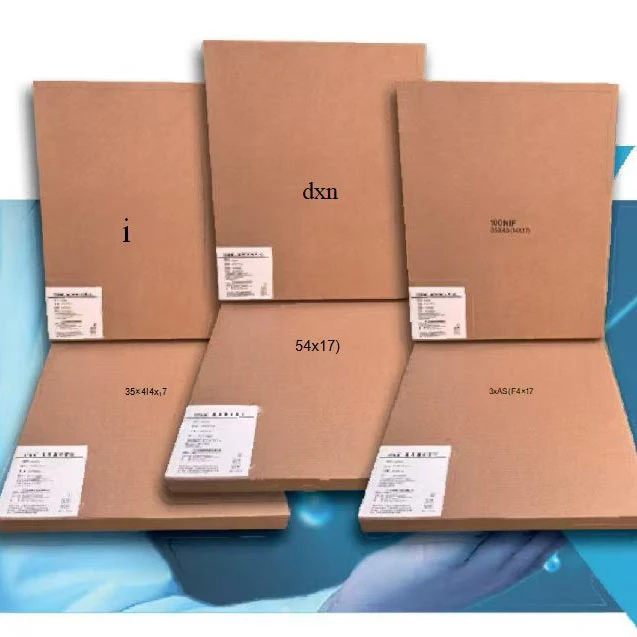
Dry Medical Film - High-Resolution, Fast, Eco-Friendly