

Sep . 19, 2025
In the rapidly evolving landscape of veterinary medicine, precision diagnostics are paramount for effective patient care. The vet hematology analyzer stands as a cornerstone technology, providing critical insights into animal health by performing comprehensive blood cell counts and differentials. These sophisticated instruments enable veterinarians to diagnose a wide array of conditions, from infections and inflammatory diseases to anemias and certain cancers, with unparalleled speed and accuracy. The adoption of advanced automated analyzers has significantly elevated diagnostic capabilities in clinics, hospitals, and research facilities worldwide, fundamentally transforming how veterinary professionals approach disease management and preventive care.
This comprehensive overview delves into the technical intricacies, market dynamics, and operational benefits associated with modern veterinary hematology analysis, offering B2B decision-makers and technical professionals a detailed perspective on this essential diagnostic tool.
The veterinary diagnostics market is experiencing robust growth, driven by increasing pet ownership, a greater emphasis on animal health, and technological advancements. Key trends shaping the demand for veterinary hematology analyzer systems include:
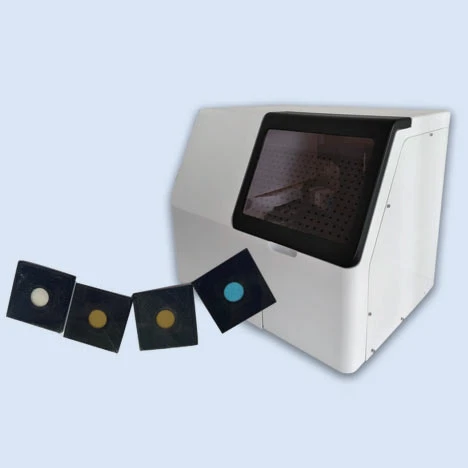
Modern vet hematology analyzer systems offer rapid, comprehensive blood analysis for diverse animal species.
These trends underscore the critical need for reliable, high-performance diagnostic equipment, and an understanding of them is vital for strategic investment in the veterinary sector.
The production of a sophisticated vet hematology analyzer is a multi-stage process demanding high precision, stringent quality control, and advanced engineering. Unlike heavy industrial equipment, the emphasis here is on miniaturization, biocompatibility, and optical/fluidic accuracy. Here's a simplified overview:
Materials: High-grade, biocompatible plastics (e.g., acrylics, polycarbonates) for fluidic pathways; precision-machined aluminum and stainless steel for chassis and mechanical components; advanced optical glass for detection cells; sensitive electronic sensors (photomultipliers, photodiodes); microcontrollers and PCBs.
Processes: Injection molding for plastic parts, CNC machining for fluidic blocks (ensuring precise bore diameters and channels) and mechanical mounts. Optical components are ground and polished to exacting standards. Electronic components are sourced from certified suppliers.
Individual modules are assembled: fluidics system (pumps, valves, dilutors), optical detection system (light source, flow cell, detectors), electrical system (power supply, control boards), and mechanical handling unit (sample aspiration). Precision alignment of optical and fluidic paths is critical.
Proprietary software is developed for instrument control, data acquisition, algorithm-based analysis (e.g., cell differentiation), data management, and user interface. This software is integrated with the hardware during assembly.
Each veterinary hematology analyzer undergoes rigorous multi-point calibration using certified reference materials and controls. Comprehensive testing protocols ensure accuracy, precision, linearity, and carryover are within specified tolerances. Environmental testing (temperature, humidity) is also performed.
Testing Standards: Adherence to international standards such as ISO 13485 (Medical Devices Quality Management), ISO 9001 (Quality Management), and CE marking ensures product safety, performance, and reliability.
The fully calibrated modules are integrated into the final casing. Ergonomics, user interface, and overall aesthetics are finalized. The product is then packaged with user manuals, accessories, and quality certificates, ready for distribution.
Service Life & Target Industries: A well-maintained vet hematology analyzer can have a service life of 7-10 years or more. These analyzers are indispensable in a range of industries:
Advantages in Typical Scenarios: The precision manufacturing and rigorous testing ensure high accuracy and reproducibility. This translates to energy efficiency (optimized fluidic and electronic systems), corrosion resistance (biocompatible and inert materials), and minimal maintenance requirements, leading to reduced operational costs for veterinary facilities.
Modern veterinary hematology analyzer systems utilize advanced technologies like electrical impedance and flow cytometry to provide comprehensive blood cell analysis. Key parameters and typical specifications include:
| Parameter | Description / Typical Range |
|---|---|
| Analysis Method | Electrical Impedance (WBC, RBC, PLT), Flow Cytometry with Laser Scatter (WBC 5-Part Diff) |
| Measured Parameters | WBC, RBC, HGB, HCT, MCV, MCH, MCHC, RDW-CV, RDW-SD, PLT, MPV, PCT, PDW, P-LCR, P-LCC, LYM#, LYM%, MON#, MON%, NEU#, NEU%, EOS#, EOS%, BAS#, BAS% (for 5-part diff) |
| Throughput | 60-80 samples/hour (varies by model and species settings) |
| Sample Volume | ~20 µL whole blood (for 5-part diff), ~9 µL (for 3-part diff) |
| Animal Species | Canine, Feline, Equine, Bovine, Ovine, Caprine, Swine, Rat, Mouse + 10-20 user-definable species |
| Data Storage | Typically 100,000+ results with histograms/scattergrams |
| Display | Large color LCD touchscreen (e.g., 10.4-inch) |
| Connectivity | USB, LAN (LIS/HIS compatibility), RS232 |
| Dimensions (W x D x H) | Approx. 400mm x 500mm x 450mm |
| Weight | Approx. 25-30 kg |
| Power Requirements | AC 100-240V, 50/60Hz, 200VA |
Understanding these technical nuances is crucial for selecting a vet hematology analyzer that aligns with a facility's specific diagnostic needs and operational throughput.
The versatility and diagnostic power of a vet hematology analyzer make it indispensable across numerous veterinary settings:
Accurate and timely blood analysis is crucial across all facets of veterinary care.
These varied applications underscore the analyzer's role as a versatile and indispensable diagnostic asset.
Investing in an advanced vet hematology analyzer brings significant technical and operational advantages to any veterinary practice:
These advantages directly contribute to improved patient outcomes, increased operational efficiency, and enhanced diagnostic confidence for veterinary professionals.
When evaluating a veterinary hematology analyzer, it's essential to compare vendors based on several critical factors beyond just the initial veterinary hematology analyzer price. While this article focuses on hematology, many vendors, such as LK International, also offer complementary diagnostic tools like a Lucky Vet Biochemistry Analyzer. A holistic approach to diagnostic equipment procurement is often beneficial. Key considerations for comparison include:
| Feature/Vendor Aspect | Basic 3-Part Diff Analyzer (Example: Small Clinic Focus) | Advanced 5-Part Diff Analyzer (Example: Referral Center Focus) |
|---|---|---|
| WBC Differential | 3-part (LYM, MID, GRAN) | 5-part (NEU, LYM, MONO, EOS, BASO) |
| Technology | Electrical Impedance | Electrical Impedance + Laser Scatter Flow Cytometry |
| Throughput | Up to 30-45 samples/hour | Up to 60-80 samples/hour |
| Sample Volume | 9-15 µL whole blood | 20-25 µL whole blood |
| Species Profiles | 5-10 common species | 10+ common + 10-20 user-definable species |
| Reagent Consumption | Lower per test cost, simpler reagent system | Higher reagent cost, more complex system |
| Data Management | Basic LIS connectivity, limited onboard storage | Advanced LIS/HIS integration, extensive onboard storage |
| Maintenance | Simplified daily/weekly tasks | More involved daily/weekly/monthly tasks |
| Cost (approx.) | Entry-level to mid-range | Mid-range to high-end |
| Vendor Support | Standard support, may vary by region | Comprehensive technical support, training, and service contracts |
Factors such as brand reputation, global service networks, and the availability of bundled solutions (e.g., combining a vet hematology analyzer with a vet chemistry analyzer from the same vendor for integrated diagnostics) also play a crucial role in the decision-making process.
Recognizing that no two veterinary practices are identical, leading manufacturers offer customized solutions to meet diverse needs. This goes beyond just the veterinary hematology analyzer price and extends to tailored configurations, training, and support:
These customized approaches ensure that a veterinary facility can acquire a diagnostic solution that precisely fits its clinical demands, budget, and operational philosophy, maximizing the return on investment for their vet hematology analyzer.
Client Profile: A large, multi-specialty veterinary hospital (Veterinary Medical Center - VMC) handling approximately 150-200 patient visits daily, including emergency and referral cases. VMC previously used an older 3-part differential vet hematology analyzer.
Challenge: The existing analyzer was slow, frequently required manual differential counts for abnormal samples, and lacked seamless integration with their hospital information system (HIS). This led to delayed diagnoses, increased labor costs, and potential for data entry errors, particularly for critical patients requiring rapid results.
Solution: VMC upgraded to a high-throughput, 5-part differential veterinary hematology analyzer with advanced laser scatter technology and full LIS/HIS connectivity. The vendor provided a comprehensive package including installation, on-site training for all shifts, and a 5-year full-service maintenance contract.
Results & Advantages:
Real-world impact of advanced vet hematology analyzer technology on patient care.
This case study exemplifies how a strategic investment in a high-quality vet hematology analyzer can yield substantial improvements in clinical efficiency, diagnostic accuracy, and ultimately, patient care within a demanding veterinary environment.
Q: What is the primary difference between a 3-part and a 5-part differential vet hematology analyzer?
A: A 3-part differential analyzer categorizes white blood cells into three groups: lymphocytes, mid-size cells (monocytes, eosinophils, basophils), and granulocytes (neutrophils). A 5-part differential analyzer provides a more detailed breakdown into five distinct populations: neutrophils, lymphocytes, monocytes, eosinophils, and basophils, offering greater diagnostic specificity.
Q: How often does a veterinary hematology analyzer require calibration?
A: Regular quality control (QC) checks should be run daily or with each new reagent lot. Full calibration using certified calibrators is typically recommended every 3-6 months, or after major maintenance, relocation, or if QC results consistently fall out of range.
Q: Can the analyzer perform tests on exotic animal blood samples?
A: Many advanced vet hematology analyzer models offer pre-programmed parameters for a wide range of common and exotic species. Some also allow for user-definable settings to optimize analysis for less common or unique species, enhancing flexibility for diverse practices.
Standard lead time for most veterinary hematology analyzer models ranges from 2-4 weeks from order confirmation, depending on inventory levels and customization requirements. For urgent requests or large project orders, expedited shipping options may be available. Delivery and installation schedules are coordinated to minimize disruption to your practice operations.
All new vet hematology analyzer units typically come with a standard 12-month manufacturer's warranty covering parts and labor for defects in materials or workmanship. Extended warranty packages and service contracts are available for purchase, offering additional years of coverage, preventative maintenance, and priority support.
Comprehensive customer support is critical for seamless operation. This includes technical support hotlines (available during business hours or 24/7 depending on service level agreements), on-site field service engineers for repairs and preventative maintenance, remote diagnostic capabilities, and online resources such as user manuals, troubleshooting guides, and software updates. Our commitment is to ensure continuous, reliable operation of your vet hematology analyzer.
The vet hematology analyzer is an indispensable tool in modern veterinary medicine, offering rapid, accurate, and comprehensive insights into animal health. As technology continues to advance, these instruments will become even more sophisticated, integrating with broader diagnostic platforms and contributing to a future of precision veterinary care. For B2B decision-makers, understanding the technical specifications, application advantages, and comprehensive support systems is crucial for making informed investments that enhance diagnostic capabilities and improve patient outcomes.

Lucky Medicinal Cold-Forming Composite Material
Comprehensive Guide To Color Photo Printing Technology: From Chemical Principles To Modern Processes